What is precast, really
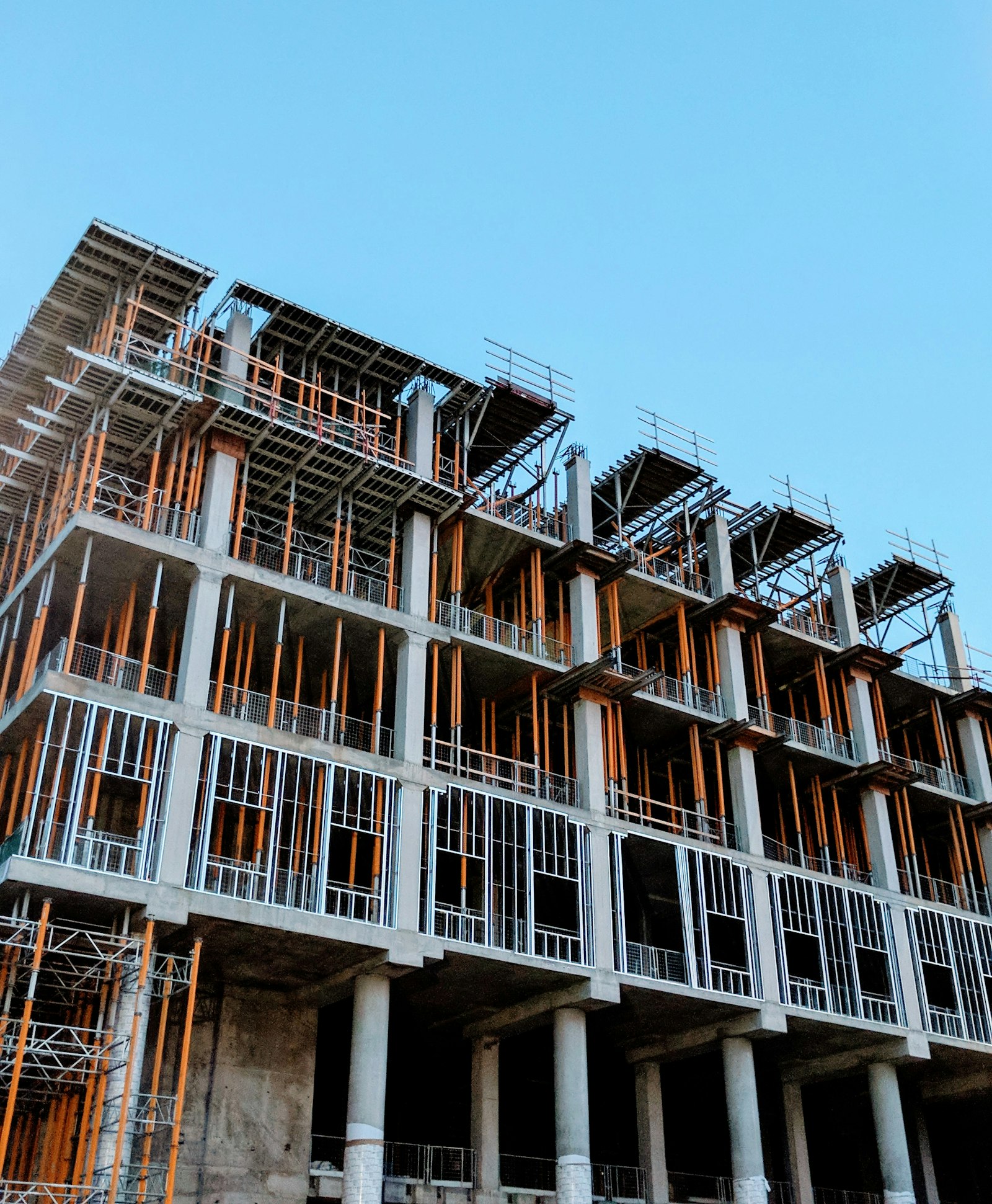
Cast-in-situ concrete — poured on site into formwork — is still the default across India. Precast flips the idea: structural elements (walls, slabs, beams, stairs, sometimes whole bathroom pods) are cast in a controlled factory, then trucked to site and assembled like Lego. The concrete is the same. The process around it is completely different.
In South India, factories in Hyderabad, Bengaluru, and the Chennai outskirts now serve commercial and premium residential projects at scale. The economics have finally tipped.
Why it is winning on premium projects
1. Speed
A conventional G+3 villa in Chennai takes 12–18 months of structural work. The same villa with precast walls and slabs can hit structure-complete in 4–6 months. Weather — Chennai’s monsoon especially — stops site pours for weeks. Factory pours never stop.
2. Quality
A factory pour happens on a vibrating table, under a roof, with calibrated mix designs, steam-cured, and tested every batch. A site pour happens on a scaffold in the rain with a mix that may be 90 minutes old by the time it arrives. The compressive strength spread on precast is typically under 5%. On site, 15% is normal and 25% is not rare.
3. Waste
A precast factory runs at roughly 2–3% material wastage. A conventional site runs at 8–12%. Over a full project, that is real money and real carbon.
4. Labour dependency
Skilled formwork carpenters and bar-benders are getting harder to find in Tamil Nadu every year. Precast shifts the skill requirement from 80 people on site to 15 people on site plus a factory. That is a risk-management decision as much as a cost one.
Where it is not the right call
- Small or one-off projects. The economics only work when you can amortise the mould. For a 2,000 sq ft independent villa with no design repetition, cast-in-situ usually still wins on cost.
- Heavily customised architecture. Every unique shape needs a new mould. Repetitive designs — twin villas, apartment stacks, compound walls — are where precast shines.
- Sites with no crane access. Precast needs a 30-tonne mobile crane working distance. Dense urban plots in Mylapore or T Nagar often cannot accommodate one.
- Clients who expect to redesign mid-project. Precast locks the design earlier. Late changes are expensive or impossible.
The cost picture in 2026
For a standard specification, precast today is typically 3–8% more expensive than cast-in-situ on direct construction cost. Once you add the value of four months of saved time (rent saved if you are a tenant, loan EMIs saved if the property is funded, earlier rental income if commercial), the total-cost-of-delivery equation often flips in favour of precast.
What to ask
- “Which elements are you proposing to precast — just walls, or slabs and stairs too?”
- “Who is the factory, and can we visit a current pour?”
- “How are the joints between precast panels being waterproofed and finished?”
- “What is the crane plan for my site?”
The joint detail is the single biggest failure point on a precast project. A builder who handwaves it is hiding something.
The direction of travel
Government housing projects in Tamil Nadu have begun specifying precast in tender documents. Once the state’s infrastructure arm anchors the demand, factory capacity grows, prices come down, and the option spreads to mid-market residential. We expect the per-square-foot gap to close fully by 2028.
For premium residential and commercial work, precast is already the right default. If you want to see a live precast project or talk through whether it fits your programme, reach out.